The machines used to make silicone labels mainly include Silicone
Dispensing Machines,
Intelligent Oven and Silicone Heat Transfer Label Machines. A
Silicone Dispensing Machine precisely deposits liquid silicone into a mold to create the label structure, while a Intelligent Oven and a
Silicone Heat Transfer Label Machine is used for integrated processing such as vacuum, glue lamination, heating, pressure, and vulcanization. The right machine depends on the label design, mold, production volume, and manufacturing process.
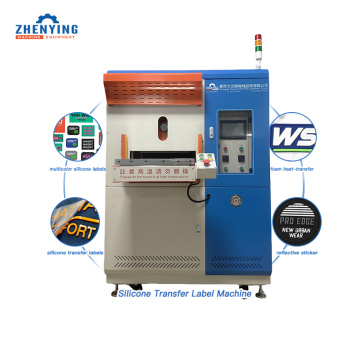
This Silicone Heat Transfer Label Machine is designed for silicone label processing that requires heating, pressure, and vulcanization.
Depending on the configuration, the machine can integrate:
Vacuum → Glue Lamination → Heating → Pressure → Vulcanization
This makes it suitable for manufacturers producing:
- Silicone heat transfer labels
- Garment silicone logos
- Silicone patches
- Decorative badges
- Silicone trademarks
It focuses on integrated processing and final label forming/vulcanization.
Key Technologies Affecting Silicone Label Quality
1. ±2℃ Precision Temperature Control
Temperature is one of the most important factors in silicone vulcanization.
Incorrect temperature may cause:
- Incomplete curing
- Product deformation
- Color inconsistency
- Different hardness levels
Zhenying Silicone Heat Transfer Label Machines use an intelligent PID temperature control system.
Temperature accuracy: ≤ ±2℃
Working surface temperature difference: ≤ ±2℃
This ensures stable curing performance for high-quality silicone labels.
2. ≤0.05mm Heating Plate Flatness
Heating plate precision directly affects heat transfer uniformity.
An uneven heating plate may cause:
- Unequal mold contact
- Local overheating
- Insufficient curing areas
- Product deformation
Zhenying Machines uses precision grinding and calibration technology.
Heating plate flatness: ≤0.05mm
Compared with common industry levels: 0.10-0.15mm
the improved flatness provides:
- Better mold fitting
- More uniform heat distribution
- Higher product qualification rate
3. Vacuum + Glue Lamination + Vulcanization Integration
A major advantage of modern silicone label machinery is process integration.
Traditional production may require several separate machines.
The integrated Silicone Heat Transfer Label Machine combines:
- Vacuum Degassing
- Automatic Glue Lamination
- Vulcanization Forming
nto one system.
Benefits:
- Less manual handling
- Reduced production steps
- Lower labor requirements
- Easier operation
One operator can manage the complete production process.
Zhenying Machines has been manufacturing silicone and PVC soft-rubber processing machinery since 1996.
The company develops equipment for silicone label, soft-rubber, and related production applications, including Silicone Dispensing Machines and Silicone Heat Transfer Label Machines.
For manufacturers evaluating a complete production solution, Zhenying provides:
Equipment + Mold + Raw Material + Technical Training Support
The equipment configuration can be developed around the customer's product, mold, production capacity, and process requirements.
Key Takeaways
Silicone Heat Transfer Label Machine → Integrated vacuum, glue lamination, heating, pressure, and vulcanization
- A Silicone Heat Transfer Label Machine is designed for automated silicone label production.
- Vacuum degassing helps reduce bubbles and improve surface quality.
- ±2℃ temperature control ensures stable silicone curing.
- ≤0.05mm heating plate flatness improves heat transfer uniformity.
- Integrated vacuum, adhesive application, and vulcanization reduce production complexity.
- Zhenying Machines provides complete silicone label manufacturing solutions.










 Contact Now


